Starting a business in Saudi Arabia can be a promising opportunity for local and foreign investors. The Kingdom offers a growing business environment, a wide range of investment opportunities, and regulatory procedures designed to facilitate company establishment.
However, before starting the incorporation process, investors should understand the company formation requirements in Saudi Arabia, including the legal conditions, required documents, capital considerations, and business licenses.
This guide explains the key requirements for establishing a company in Saudi Arabia in 2026.
What Are the Company Formation Requirements in Saudi Arabia?
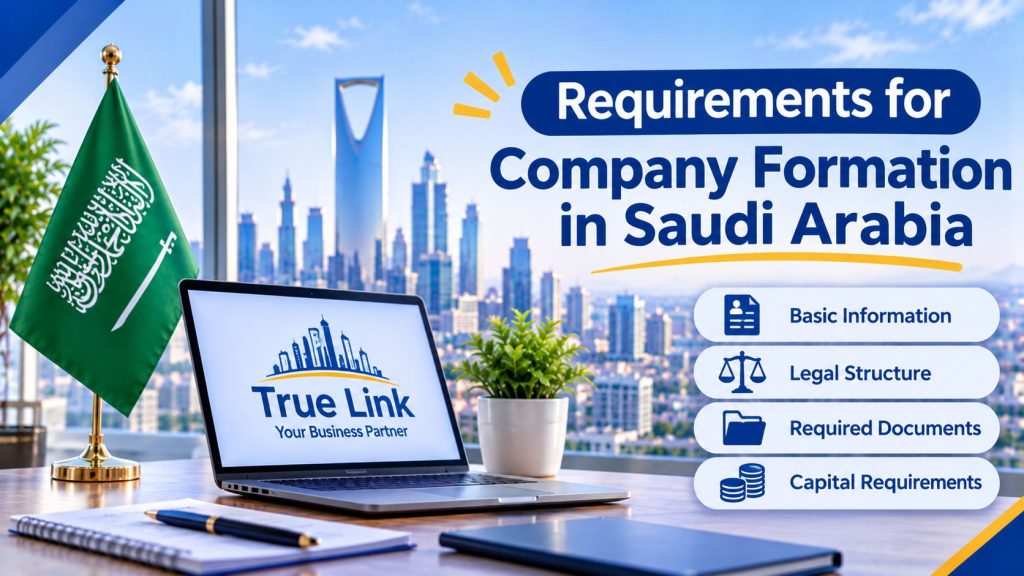
The requirements for setting up a company in Saudi Arabia depend on the business activity, legal structure, and nationality of the shareholders. In general, investors should consider the following:
- Business activity: Determine the commercial or professional activity the company will conduct.
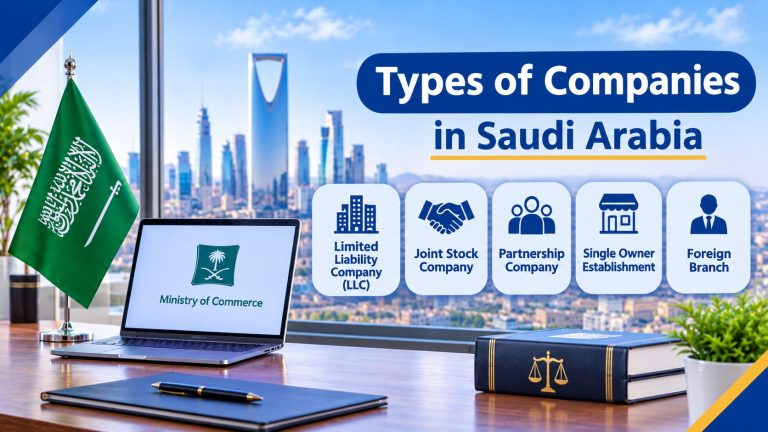
- Legal structure: Choose the appropriate company type, such as a Limited Liability Company (LLC), Joint Stock Company, or another legal form.
- Shareholders: Identify the founders, shareholders, and their ownership percentages.
- Trade name: Select and reserve a business name that complies with Saudi regulations.
- Articles of Association: Prepare the company’s constitutional documents and define its management and ownership structure.
- Share capital: Determine the capital required for the selected company type and business activity.
- Business address: Provide a registered business address when required.
- Regulatory approvals: Obtain any approvals or permits required for the intended activity.
- Founder eligibility: Ensure that shareholders and company managers meet the applicable legal requirements.
Documents Required to Establish a Company in Saudi Arabia
The required company formation documents vary depending on whether the investor is a Saudi national, a resident, or a foreign investor.
1. Documents for Saudi Investors
Saudi investors may generally need:
- A valid National ID.
- The proposed company name.
- Details of shareholders and their ownership percentages.
- The company’s Articles of Association, where applicable.
- The registered business address.
- Any additional documents required for the selected activity.
2. Documents for Residents in Saudi Arabia
Non-Saudi residents may be asked to provide documents such as:
- A valid Iqama (residence permit).
- Passport details, where required.
- Shareholder and manager information.
- The proposed business activity and company structure.
- Additional approvals or documents depending on the investor’s legal status and the nature of the business.
Eligibility requirements may differ according to the investor’s residency status and applicable regulations.
3. Documents for Foreign Investors
Foreign companies and investors may need to provide:
- A copy of the foreign company’s Commercial Registration, duly authenticated as required.
- The company’s Articles of Association or equivalent incorporation documents.
- Financial statements for the latest fiscal year, where required.
- Information about shareholders, owners, and authorized representatives.
- Documents relating to the proposed business activity.
- Any additional documents requested by the Ministry of Investment or other competent authorities.
Foreign documents may need official authentication and certified Arabic translation, depending on the applicable requirements.
Requirements for Foreign Investors in Saudi Arabia
Foreign investors must comply with the Saudi Investment Law and its Implementing Regulations.
Under the updated Investment Law, foreign investors are generally required to complete Investment Registration with the Ministry of Investment (MISA) before carrying out investment activities in the Kingdom.
The registration requirements depend on the investor’s category and the selected economic activity. Some activities may be restricted or subject to additional conditions or approvals.
After completing the required registration procedures, investors can proceed with company establishment, Commercial Registration, and the relevant business permits.
Can Foreign Investors Own 100% of a Company in Saudi Arabia?
Yes. Foreign investors can own 100% of a company in many business activities in Saudi Arabia. However, full foreign ownership is not available in every sector.
Certain activities may be restricted, excluded, or subject to specific ownership conditions and regulatory approvals. Investors should therefore check the requirements for their intended activity before establishing the company.
Minimum Capital Requirements in Saudi Arabia
There is no single minimum capital requirement that applies to every company in Saudi Arabia. The required capital depends on the legal structure, business activity, and any sector-specific regulations.
| Company Type | Capital Considerations |
| Limited Liability Company (LLC) | Generally determined according to the company’s needs and applicable activity requirements. |
| Joint Stock Company | Subject to the capital requirements stipulated under the Companies Law. |
| Simplified Joint Stock Company | Offers greater flexibility in determining capital, subject to applicable regulations. |
| Foreign-owned Company | May be subject to additional capital or financial conditions depending on the activity. |
Investors should verify any specific capital requirements before submitting their applications.
What Licenses Are Required to Operate a Business in Saudi Arabia?
Company incorporation and permission to conduct a specific business activity are not always the same process. Depending on the company’s activity and location, additional licenses or approvals may be required.
These may include:
- Commercial Registration (CR): The official registration of the company with the relevant authorities.
- Municipal License: Required for eligible business premises and activities, where applicable.
- Sector-Specific Permits: Approvals from the relevant regulatory authority for activities such as healthcare, education, financial services, or engineering.
- Environmental Permits: Required for certain industrial and environmentally regulated activities.
The exact requirements depend on the nature of the business.
Common Reasons for Delays or Rejection of Company Formation Applications
Company establishment applications may be delayed or require additional documentation for several reasons, including:
- Submitting incomplete or inaccurate information.
- Choosing a business activity that requires additional approvals.
- Providing documents that are expired or not properly authenticated.
- Failing to meet the applicable ownership or capital conditions.
- Selecting a company name that does not comply with naming regulations.
- Not completing the required shareholder verification procedures.
Reviewing the requirements before applying can help reduce delays.
What Should You Do After Receiving Your Commercial Registration?
Once the company has been established and its Commercial Registration has been issued, additional steps may be necessary to begin operations legally.
These may include:
- Registering with the Zakat, Tax and Customs Authority (ZATCA), as applicable.
- Opening a corporate bank account.
- Completing the required registration with the General Organization for Social Insurance (GOSI).
- Meeting applicable labor and employment requirements.
- Complying with electronic invoicing requirements, where applicable.
- Obtaining any remaining operational permits.
How Can True Link Help You Meet Company Formation Requirements in Saudi Arabia?
Meeting the company formation requirements in Saudi Arabia may involve several steps, especially if you are a foreign investor or plan to establish a business in an activity that requires additional approvals and licenses.
This is where True Link Business Services comes in. We provide support to help investors and entrepreneurs establish their companies and complete the required procedures in the Kingdom.
True Link’s Company Formation Services
True Link can assist you with several stages of the company formation process, including:
- Helping you select the right business activity.
- Identifying the appropriate legal structure for your business.
- Explaining the company formation requirements in Saudi Arabia based on your specific circumstances.
- Assisting with the preparation and review of required documents.
- Following up on company establishment procedures and Commercial Registration issuance.
- Assisting foreign investors in meeting the applicable requirements.
- Following up on business licenses and activity-related approvals.
If you are planning to start a business in the Kingdom, you can benefit from our company formation services in Saudi Arabia and receive the support you need to complete the establishment process in an organized manner.
Conclusion
Understanding the company formation requirements in Saudi Arabia is the first step toward launching a successful business in the Kingdom. Preparing the necessary documents and choosing the right business activity and legal structure can help you avoid many procedural obstacles.
Company formation conditions vary depending on the legal structure, the investor’s nationality, and the nature of the business activity. Therefore, it is essential to review the official requirements and ensure that all applicable conditions are met before submitting an incorporation application.
If you are looking for a specialized service provider to help establish your company and follow up on the required procedures and licenses, True Link Business Services can provide the support you need to enter the Saudi market with confidence and professionalism.
Frequently Asked Questions About Company Formation in Saudi Arabia
1. What are the basic requirements for establishing a company in Saudi Arabia?
The basic requirements include selecting a business activity and legal structure, identifying shareholders, preparing the required documents, determining the capital, and completing the relevant registration procedures.
2. Can a foreigner establish a company in Saudi Arabia?
Yes. Foreign investors can establish companies in Saudi Arabia, subject to the Investment Law, Investment Registration requirements, and any conditions applicable to their chosen activity.
3. Is a Saudi partner required to establish a company?
Not necessarily. Some activities allow full foreign ownership, while others may require a local partner or additional conditions.
4. What documents are required to establish a company in Saudi Arabia?
Documents may include identification, shareholder details, incorporation documents, financial statements for certain foreign investors, and activity-specific approvals.
5. Is there a minimum capital requirement for establishing a company?
There is no universal minimum capital requirement for all company types. The required amount depends on the legal structure and business activity.
6. How long does it take to establish a company in Saudi Arabia?
The processing time varies depending on the company type, investor category, completeness of the documents, and whether additional regulatory approvals are required.
7. Can a foreign investor own 100% of a Saudi company?
Yes, in many permitted activities. However, some sectors are restricted or subject to specific ownership conditions.
8. Is a physical office required to establish a company?
A registered business address may be required, while additional premises or location requirements depend on the business activity and applicable licensing rules.
9. What happens after the Commercial Registration is issued?
The company may need to complete tax, banking, social insurance, labor, and other regulatory procedures before commencing its business operations.